
5 Life Lessons from George Washington that Still Matter Today
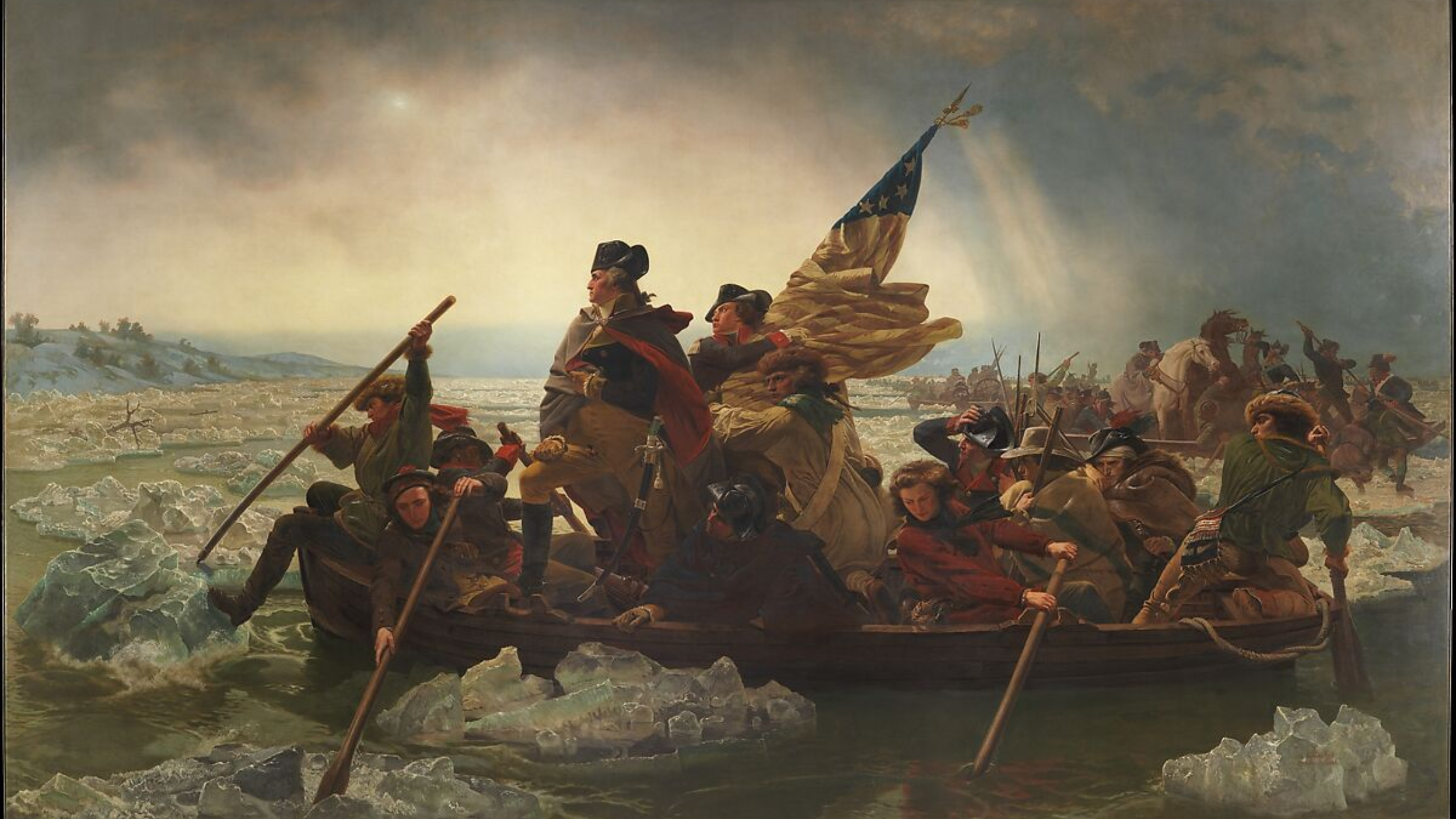
Washington Crossing the Delaware (1851), Emanuel Leutze. Public domain. Courtesy of the Metropolitan Museum of Art.
After 250 years, George Washington remains a legend in the minds of millions of Americans and freedom-loving people across the world. Remembered for his strong, dignified demeanor, Washington truly served as the steady hand necessary for the revolution to survive. But, he wasn’t always the calm, cool, and collected leader we remember today. In fact, his life was full of heartbreak and failures–especially in the early years. The Washington we remember today wasn’t born, but forged through fire and carefully cultivated over a lifetime.
As we consider our own lives, there is much we can learn from the life of the Father of Our Country. We often judge ourselves by who we are at the present rather than the trajectory of our course. I would submit to you that the latter is a much better measure of a man than the former.
Here are 5 life lessons from George Washington that still matter today:
1. Play the hand that you’ve been dealt.
While Washington enjoyed many privileges as a member of the Virginia gentry class, he missed out on opportunities many of his peers enjoyed. The most devastating was the loss of his father at age 11. Consequently, he was not able to receive the classical education his older half-brothers and many of his contemporaries enjoyed. Rather than wallowing in self-pity, Washington applied himself to become a respected land surveyor, planter, and soldier; which led to his election to the Virginia House of Burgesses, appointment as Commander in Chief, and eventually to him becoming the first president of the United States of America. You can’t control what happens to you, but you can control how you respond.
2. Recognize your limitations and learn from others.
George Washington was intimately aware of his own shortcomings–most notably, for his anger issues. As a young teenager, he hand-copied Rules of Civility, a guide for proper manners and courtesy. Upon accepting his command over the Continental Army, Washington wrote, “I do not think myself equal to the Command I am honored with.” And, he was mostly silent at the Constitutional Convention, even though he presided over it. Much of Washington’s success rests upon his ability to recognize his limitations, cultivate the character he desires, and rely on others when their strengths complement his own weaknesses.
3. Take responsibility for your mistakes.
Washington is well-documented for making errors as a young officer. From the impulsive decision to attack and kill French commander, Jumonville, to the foolish defense at Fort Necessity, these mistakes weighed heavily upon him. Even early in the American Revolution, Washington made mistakes he would learn from, eventually adapting his strategy to the wise recommendations of his subordinates. Our mistakes don’t define us. Our response does.
4. Have strong convictions, loosely held.
People without any strong convictions are hard to trust. If someone is not willing to stand by what they believe, it begs the question whether they really believe it at all. Someone without convictions is easily bullied into adopting whatever ideas are most popular. At the same time, if someone is not willing to change their mind, it calls into question whether they are really in pursuit of what is good and true. And, if someone is really in pursuit of what is good and true, they will be willing to change their convictions when they receive better arguments, evidence, and perspectives.
George Washington participated in one of the great evils of history–the Atlantic Slave Trade. It is important to note that this evil is not unique to Washington, the founding fathers, southern planters, the United States, or even the Americas. Still, this does not change the fact that he partook and benefitted from it. In the heat of much deliberation during the Constitutional Convention, Washington writes, “There is not a man living who wishes more sincerely than I do, to see a plan adopted for the abolition of it—but there is only one proper and effectual mode by which it can be accomplished, & that is by Legislative authority.” And, at the end of his life, he made provisions for his slaves to be taken care of, and freed them.
In a world where slavery had been the norm, Washington changed his mind.
5. Serve for the sake of duty, not selfish gain.
A constant theme throughout George Washington’s service in the Continental Army and in the presidency is a desire to give up his power and return to private life at his home in Mount Vernon. He reluctantly accepted responsibility when duty called and served in each role until the work was done. Even when he could have held onto power, he gave it up, and in doing so, set an example for the future leaders of America.
Most of us will not serve in the government or in the military, but these applications from Washington’s life can help us all close the gap between our values and our actions. For many of us, our circle of influence is small, but small doesn’t mean insignificant. We, too, can cultivate character across a lifetime and reflecting on leaders like Washington who did that can help us maintain an upward trajectory of progress. Play the hand you’ve been dealt. Recognize your limitations and learn from others. Take responsibility for your mistakes. Have strong convictions, loosely held. Serve for the sake of duty, not selfish gain. In applying these lessons, you might not become a legend in the minds of millions, but you will leave a legacy for your family, your friends, and your community.
